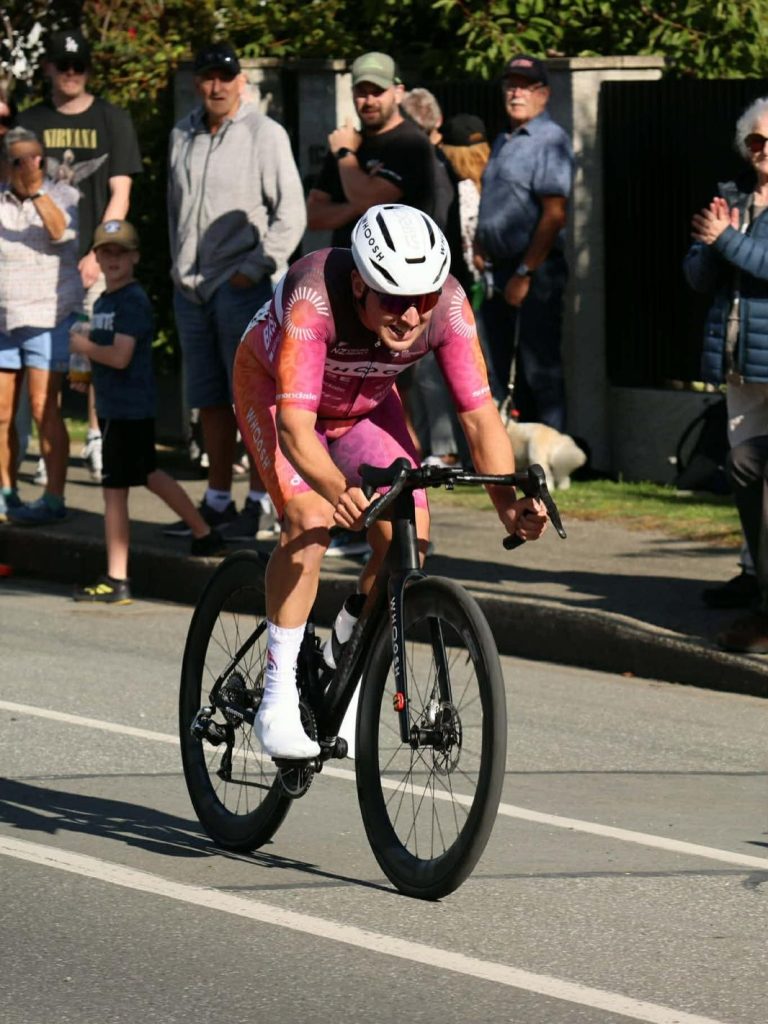
Why We Ride: James Wilson
It’s 6:00 a.m. in Timaru, a small coastal city on the South Island of New Zealand, and James Wilson is already awake with his laptop open, ready to talk bikes.
“It’s the only time I have,” he tells me.
We have about an hour before he heads out to his job at a Toyota dealership. Like much of his training, this conversation is built around what his schedule allows. When the workday ends, he’ll jump straight on the bike, riding for two to three hours depending on the plan. In the winter, those rides often stretch into the dark, and given where he lives, it’s not unusual for him to complete an entire training block without seeing another rider.
That rhythm—work, train, recover, repeat—has become his normal.
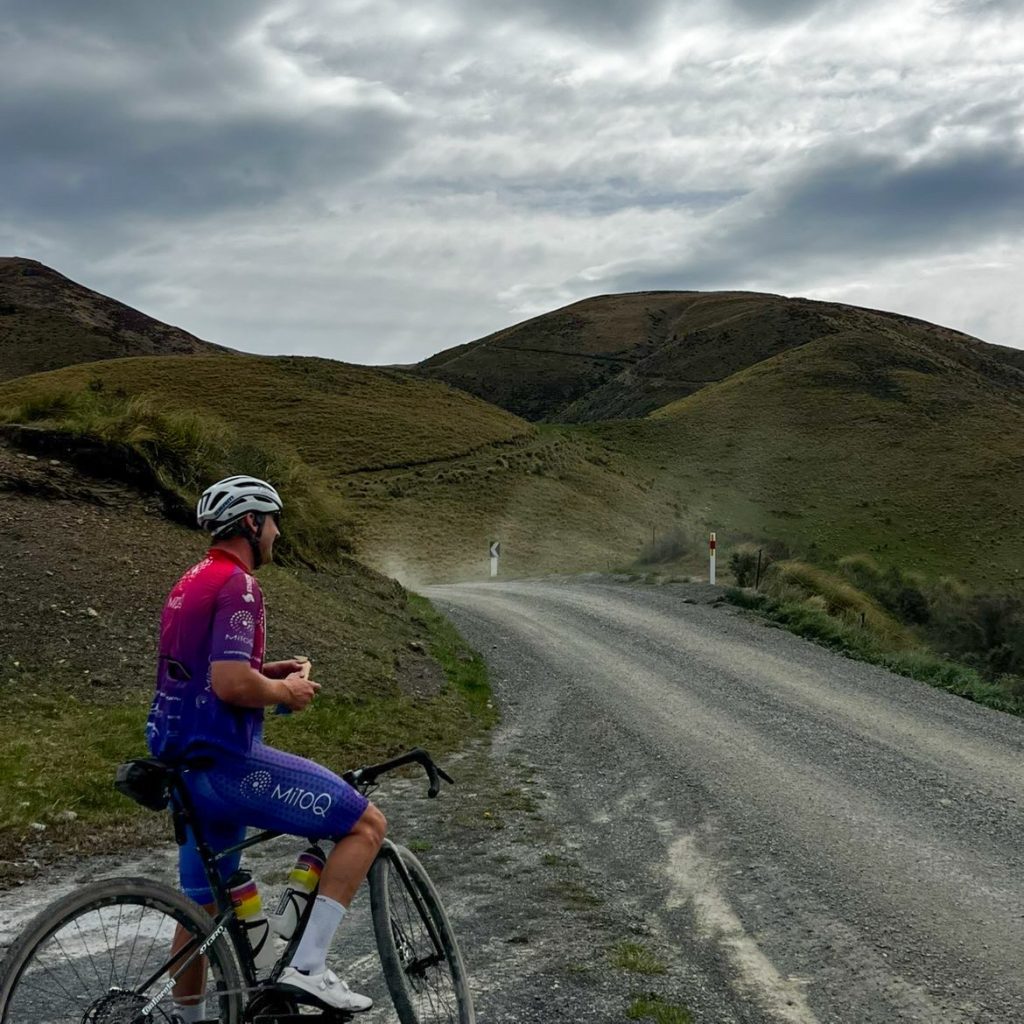
For the past few years, James has ridden for the Whoosh New Zealand Cycling Project, a development-focused team designed to help young riders break into international racing. But outside of team camps and race travel, he rarely trains alongside his teammates. Timaru, with a population of roughly 50,000, sits more than two hours from Christchurch, the nearest major city, and well outside the kind of environment typically associated with high-performance cycling.
There is no deep local racing calendar, no group rides, and little in the way of a visible cycling culture.
“Cycling’s not really a big thing in New Zealand,” James explains. “Rugby’s the main sport. Cycling’s probably… a C-class sport.”
In that context, his path into the sport feels less inevitable and more incidental.
James was around 12 years old when his father began riding mountain bikes with friends, taking part in local endurance events. What started as a shared activity quickly became something more. James joined in, traveling to smaller races and spending long days on the bike alongside his dad.
“It was just a way for us to spend time together,” he shares.
A few years later, a family friend introduced him to road cycling. He joined a local club, began racing more consistently, and gradually found that he preferred the speed and technical demands of the road. By the time he reached high school, his results began to reflect that shift.
“I really started to enjoy it… and I started to win quite a few school races.”
At 16, he connected with the New Zealand Cycling Project, began working with a coach, and started to approach the sport with greater structure and intent. Training became more deliberate, and with it came a deeper understanding of what it would take to compete at a higher level.
That progression eventually led him to the United States.
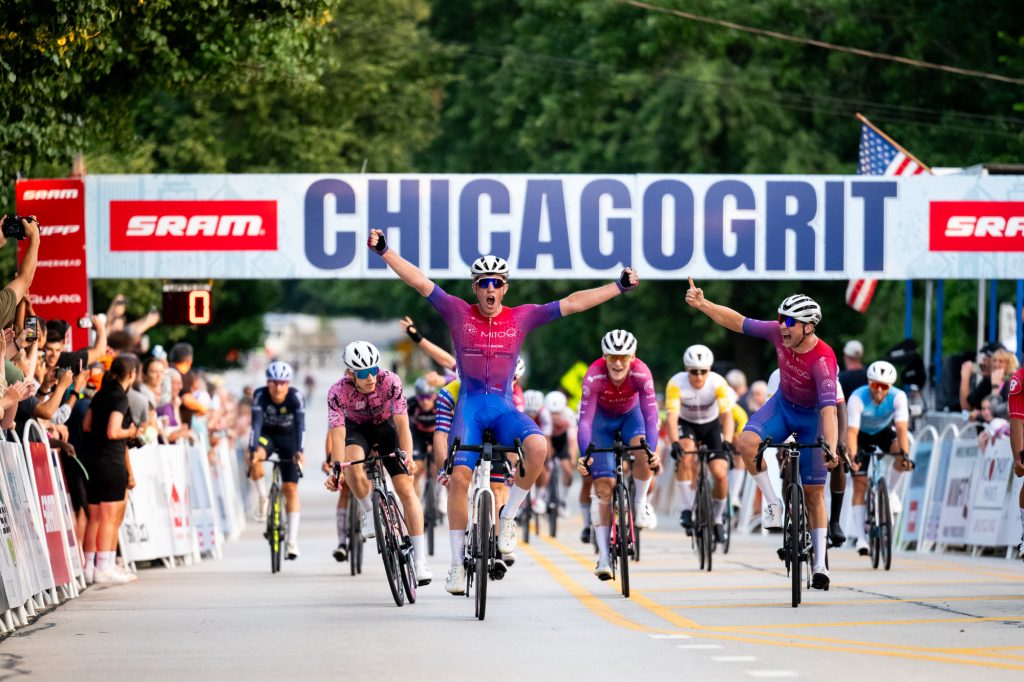
In 2024, at 21 years old, James traveled to race Chicago Grit for the first time. The racing itself was demanding, but the broader environment was just as much of an adjustment.
“Americans are loud,” he says, laughing. “There’s constant communication, constant movement. Riders are attacking, the pace is fast and aggressive.”
For a rider accustomed to training alone, the experience of racing—and living—with his teammates over an extended period introduced a different side of the sport.
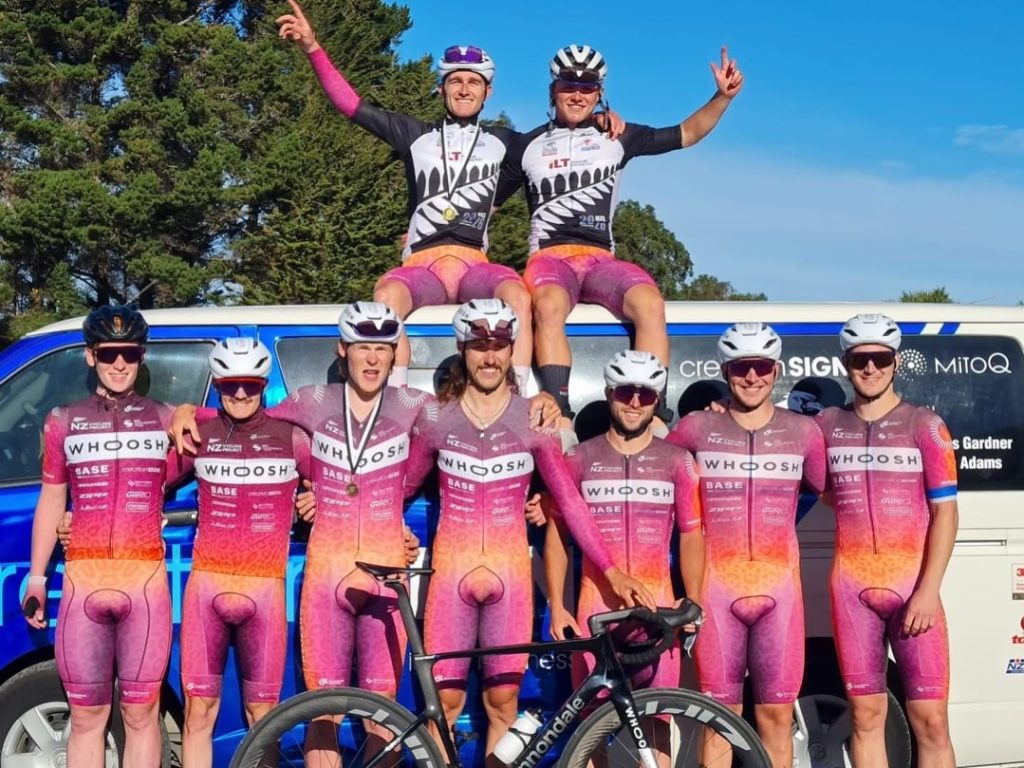
“You spend three months traveling together, so you get to know how everyone races, how they communicate,” he says. “We all get along really well.”
That shared time is central to the team’s purpose. Designed to develop young New Zealand riders and position them for opportunities on the world stage, the program has already produced athletes who have gone on to race for big teams and achieve international success.
“Our goal is to get young Kiwis onto the world stage,” James says, referencing riders such as Aaron Gate, George Jackson, and Josh Burnett as examples of what’s possible.
Within that structure, James has continued to evolve as an athlete, especially in areas that are less visible but equally important. Nutrition, in particular, has become a point of focus over the past several seasons.
Race-day preparation is dialed and intentional.
“I might have muesli for breakfast, then go for a spin,” he explains. “At lunch I’ll aim for about 100 grams of carbs, then maybe pancakes or bagels a few hours before the race.”
Two 500ml bottles (one water, one with a carbohydrate and electrolyte mix from Precision Fuel and Hydration) are standard. In the final minutes before the start, he’ll take in a caffeinated gel, with the option to grab another mid-race depending on how the effort unfolds.
The cohesion and camaraderie that will come as a result of living and racing together for three months makes a world of difference in a series like Chicago Grit, where races are fast, technical, and unpredictable. While the team will outline a general plan beforehand, James is quick to point out that crit racing rarely allows for rigid execution.
“We’ll make a plan, but it has to stay open,” he says. “In crits, you have to react, adjust, and communicate.”
That becomes even more critical when racing against established domestic teams such as L39ion of Los Angeles and Team Cadence—squads known for aggressive tactics and deep rosters.
This year, as he lines up against some of the best crit racers in the country, he’ll be riding a brand new bike: 2026 Cannondale Supersix Evo Hi Mod, with full SRAM RED AXS, complete with 56T 1x chainring, 165mm cranks, and a 10-33T cassette. He’ll be decked out with ZIPP 404 Firecrest wheels and, of course, a Hammerhead head unit to track everything.
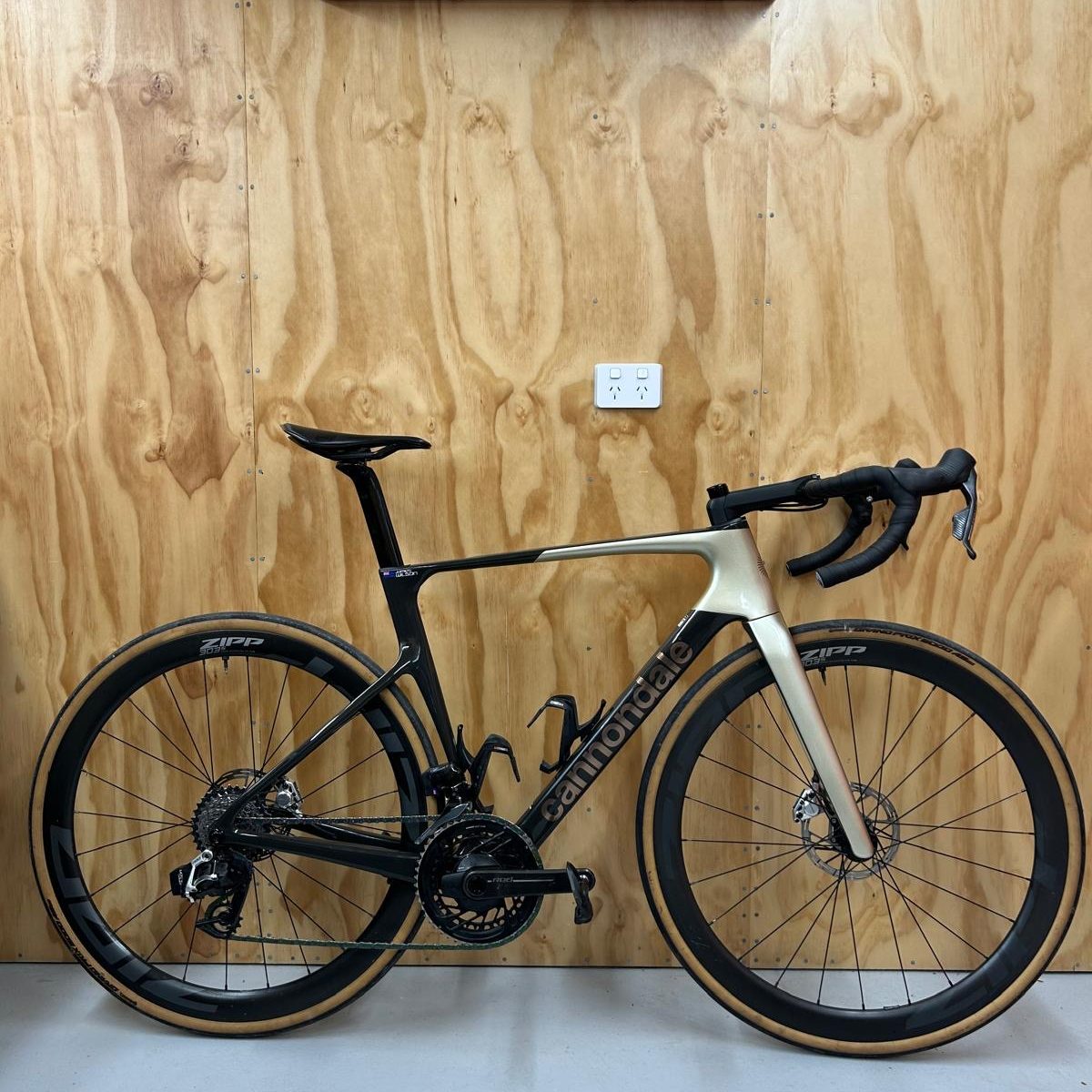
James’ training set up (race setup still in progress)
It’s a setup that mirrors the way James prefers to race.
“I like making it hard,” he says. “I’d rather sprint from a small group than a big bunch.”
He prefers the kind of courses where positioning is everything and the margin for error is slim, where you’re either present at the front of the race or effectively out of it. That style necessitates a willingness to take responsibility for the outcome, rather than hoping the race resolves itself in your favor. It also aligns closely with the identity of the Whoosh NZ Cycling Project, a team that has built its reputation on full send racing.
“We’re not really a team that just sits back,” James explains. “We go and race hard and see what happens.”
One of the defining characteristics of the Whoosh team is how much they rely on one another mid-race—communicating, recalibrating, and adjusting as situations evolve.
“We’re always talking,” he says. “That’s probably one of our biggest strengths.”
Spend enough time around the team, and it becomes clear that the cohesion is not accidental. Three months of travel, shared housing, and daily racing will do that. Riders learn each other’s tendencies—who is likely to attack, who prefers to wait, who will bury themselves to reel in attacks.
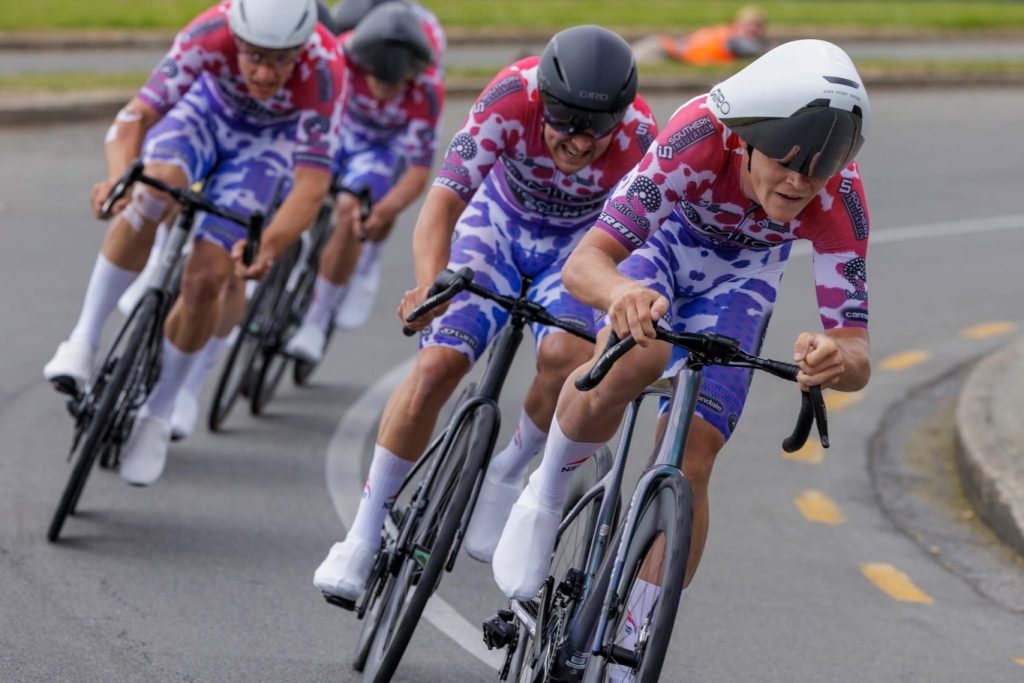
It also creates a dynamic that is, in its own way, uniquely cycling: a mix of camaraderie and competition that never fully resolves into one or the other.
“There are definitely guys you want to beat,” James says, almost casually. “You respect them… but you still want that win.”
Last year brought consistency—multiple podiums, a second-place finish overall in Chicago—but not the result he ultimately came for.
“I haven’t had that international win yet,” he says. “That’s the goal this year.”
The Whoosh NZ Cycling Project will return to Grit once again—thanks to sponsor, SRAM—committing to all ten days as a team. Results matter, of course, but the real goal is to develop riders, to create opportunities, and to ensure that young New Zealand athletes are seen on a broader stage.
“It’s about getting Kiwi recognition,” James says.
For the next few months, it’s back to early mornings and long rides alone—until he returns to Chicago, together with his team, and finally puts all of that unseen work on display.